Mountains · Est. 1838 · FIPS 37089
Henderson County Map, North Carolina
The complete Henderson County map and reference for Henderson County, North Carolina. View an interactive map of Henderson County highlighted within the state, see its county seat (Hendersonville), confirm its location in the Mountains region, and explore population, cities, land area, and civic data — all on one page. Henderson County is a mid-to-large North Carolina county, with a population of 116,281 per the latest U.S. Census Bureau data (ranked #26 of 100 NC counties, roughly 1.11% of the state total).
Last reviewed: June 2026 · Sources: U.S. Census Bureau, NC OneMap
Henderson County map
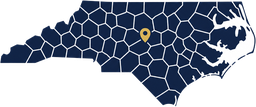
The Henderson County map at right shows Henderson County highlighted on the official North Carolina county boundary layer, sourced from the U.S. Census Bureau TIGER/Line shapefiles and NC OneMap. The map of Henderson County uses the county's true geographic outline — not a simplified illustration — so the boundary, neighboring counties, and the position of the county seat (Hendersonville) are all accurate to the official statewide GIS layer.
Use the interactive Henderson County, NC map to:
- See exactly where Henderson County sits within North Carolina and the Mountains region.
- Identify the 5 counties that share a border with Henderson County.
- Compare Henderson County's size and shape to the other 99 NC counties.
- Locate Hendersonville, the Henderson County seat, relative to the rest of the state.
Need a printable or offline copy? Open the interactive NC county map and use Map Studio to export a Henderson County map as a free PDF, PNG, or SVG. The download includes the county boundary, the county seat marker, and the surrounding Mountains region for context — suitable for classroom handouts, reports, or planning documents.
Where is Henderson County?
Henderson County is one of North Carolina's 100 counties and sits in the western mountainous portion of the state, part of the southern Appalachian range. Elevations here are the highest in the eastern United States, with forested ridgelines, cool summers, and snow-prone winters. Its county seat — the municipality that serves as the seat of local government — is Hendersonville. The county covers approximately 373 square miles of land area, ranking #70 of 100 NC counties by area.
On the statewide map at right, Henderson County is highlighted. Use the interactive NC county map to compare its position to neighboring counties, or browse the full directory of all 100 NC counties.
Neighboring counties map — counties that border Henderson County
Henderson County shares a land border with 5 counties inside North Carolina's 100-county system. Each neighbor below links to its own dedicated county map page, so you can step from the Henderson County map straight into the surrounding mountains landscape — useful for planning trips, comparing regional demographics, or studying how county lines were drawn.
shares the Mountains region with Henderson County and anchors a major metro around Asheville.
shares the Mountains region with Henderson County and is more rural, with Waynesville as its county seat.
shares the Mountains region with Henderson County and is more rural, with Columbus as its county seat.
shares the Mountains region with Henderson County and is more rural, with Rutherfordton as its county seat.
shares the Mountains region with Henderson County and is more rural, with Brevard as its county seat.
Want the full picture? Open the interactive NC county map to pan, zoom, and inspect every county that touches Henderson County.
Population & density
The latest U.S. Census Bureau data recorded 116,281 residents in Henderson County, making it the 26th most populous of North Carolina's 100 counties and the 2nd most populous of the 23 counties in the Mountains region. Population density works out to approximately 312 people per square mile across 373 square miles of land area.
Henderson County's population represents roughly 1.11% of North Carolina's statewide total. For ranked comparisons across all 100 counties, see the full NC county population page, or jump straight to the largest counties or smallest counties lists.
Source: U.S. Census Bureau, latest available data (Decennial Census P1 totals plus annual Vintage population estimates). Figures are rounded; see our methodology for the full sourcing trail.
Geography & climate
Henderson County's terrain follows the broader pattern of the Mountains region. The Mountains region is defined by Blue Ridge ridgelines, cool summers, frost-prone shoulder seasons, and snow at elevation; the Piedmont is rolling hills with hot, humid summers and mild winters; and the Coastal Plain is flat, sandy, and hurricane-exposed in late summer and early fall. Within the Mountains, individual counties differ sharply by elevation — county seats in higher elevation valleys see materially cooler summers and earlier first-frost dates than those at the foothills.
For county-level climate data, the NOAA NCEI county-level climate page provides 30-year normals, monthly temperature and precipitation, and historical extremes. Hurricane and severe-weather climatology for North Carolina counties is published annually by the State Climate Office at NC State University.
Economy
Tourism, outdoor recreation, hospitality, and skilled trades are the dominant economic drivers, with seasonal pulses tied to leaf-peeping in autumn, summer cooling-off travel, and winter snow sports near the higher peaks.
Up-to-date county-level labor force, unemployment rate, average weekly wage, and industry-mix data for Henderson County are published by the U.S. Bureau of Labor Statistics (Quarterly Census of Employment and Wages and Local Area Unemployment Statistics) and by the North Carolina Department of Commerce's Labor & Economic Analysis Division (LEAD). For a non-statistical view, the county's own Economic Development office is typically the most current source for major employers and active industrial sites.
Cities & towns in Henderson County
Henderson County contains the following major incorporated places, ranked by population (most recent U.S. Census Bureau data):
| City / town | Population | Notes |
|---|---|---|
| Hendersonville (county seat) | 15,137 |
Looking for a city not listed? See our full NC cities directory or the city-to-county lookup.
Government & civic data
Like all North Carolina counties, Henderson County is governed by an elected Board of County Commissioners and provides a standardized set of statutory services: the Register of Deeds, Sheriff's Office, county Board of Elections, Department of Social Services, Health Department, Tax Administration, and a court system under the unified state Administrative Office of the Courts. Hendersonville is the seat of county government and the location of the courthouse.
Public schools in Henderson County operate under one or more local education agencies (LEAs) overseen by the North Carolina Department of Public Instruction. Property records, parcel data, and county GIS layers are typically published through the county GIS or Tax department's portal and aggregated statewide on NC OneMap.
History
Henderson County was formed in 1838, during the early statehood and antebellum period when North Carolina was actively subdividing larger original counties into smaller, more administrable units. No additional counties have been created in North Carolina since 1911, and none have been dissolved or merged. Historic county-formation records are maintained by the North Carolina Department of the Secretary of State and the State Archives.
Frequently asked questions about Henderson County
Where can I find a Henderson County map?
This page is the most complete Henderson County map online. It includes an interactive map of Henderson County highlighted on the statewide North Carolina map, plus printable and PDF versions through our Map Studio. Henderson County sits in the Mountains region of NC, with Hendersonville as the county seat.
What does the Henderson County map show?
Our Henderson County, NC map shows the county's official boundary, its county seat (Hendersonville), its location within the Mountains region of North Carolina, neighboring counties, and the major incorporated cities and towns inside the county.
What is the county seat of Henderson County, NC?
The county seat of Henderson County is Hendersonville.
What is the population of Henderson County?
Henderson County has a population of 116,281 as of the latest U.S. Census Bureau data, which ranks it #26 of North Carolina's 100 counties.
What region of North Carolina is Henderson County in?
Henderson County is in the Mountains region of North Carolina. It is the #2 most populous of the 23 counties in that region.
How big is Henderson County?
Henderson County covers approximately 373 square miles of land area, ranking #70 of 100 NC counties by area. Its population density is roughly 312 people per square mile.
When was Henderson County established?
Henderson County was formed in 1838. North Carolina has had its current 100-county configuration since 1911.
What is the FIPS code for Henderson County?
The FIPS (Federal Information Processing Standards) code for Henderson County is 37089. North Carolina's state FIPS code is 37.
Can I print or download the Henderson County map?
Yes. Open our Map Studio to download a Henderson County map as a PDF, PNG, or SVG, or to print a high-resolution version sized for letter or tabloid paper. The download is free and includes the county boundary, the county seat marker, and the Mountains region context.
Which counties border Henderson County?
Henderson County shares a land border with 5 North Carolina counties: Buncombe County, Haywood County, Polk County, Rutherford County, Transylvania County. Each one has its own dedicated county map page on NC County Map.
What cities are in Henderson County?
The major incorporated place in Henderson County is Hendersonville.
- Henderson County is the #26 most populous and #70 largest by area of North Carolina's 100 counties.
- Its county seat is Hendersonville, and it is part of the Mountains region.
- It was established in 1838 and uses the FIPS code 37089.
Editorial note: this page is a sourced reference compiled from U.S. Census Bureau and NC OneMap data. Updates are made on a rolling basis as new Vintage estimates are released. If you spot an error, please let us know. See our editorial policy for how we handle corrections.