Geography pillar
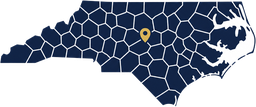
North Carolina regions map — Mountains, Piedmont & Coastal Plain
North Carolina divides naturally into three geographic regions — the Mountains in the west, the Piedmont in the center, and the Coastal Plain in the east. Every one of the state's 100 counties belongs to exactly one of them. The interactive map below color-codes all 100, and the sections that follow give deep regional context plus full county lists.
Last reviewed: June 2026 · Sources: U.S. Census Bureau, NC OneMap
Hover any county to see its name and region; click to open its detail page. Color codes: Mountains, Piedmont, Coastal Plain.
Mountains
- Counties
- 23
- Population
- 1,149,326
- Share of state
- 11.0%
- Land area
- 9,636 mi²
Piedmont
- Counties
- 37
- Population
- 6,601,397
- Share of state
- 63.2%
- Land area
- 17,521 mi²
Coastal Plain
- Counties
- 40
- Population
- 2,690,166
- Share of state
- 25.8%
- Land area
- 21,481 mi²
Mountains region
The Mountain region sits in the western portion of the state and is part of the southern Appalachian range.
The Mountain region (also called Western North Carolina, or WNC) covers the westernmost portion of the state. It is dominated by the Blue Ridge Mountains, the Great Smoky Mountains, and the Black Mountains — which include Mount Mitchell, the highest peak in the eastern United States at 6,684 feet. Counties here are characterized by lower population density, higher elevation, cooler average temperatures, and an economy weighted toward tourism, outdoor recreation, hospitality, and skilled trades.
Geography
Rugged Appalachian terrain with peaks above 6,000 feet, narrow river valleys (the French Broad, the Pigeon, the Nantahala, the Tuckasegee), and extensive national forest land (Pisgah and Nantahala National Forests).
Economy
Tourism and hospitality (Asheville is the regional capital), outdoor recreation, craft manufacturing, higher education (Western Carolina, Appalachian State, UNC Asheville), and forestry. Seasonal pulses tied to fall leaf-peeping and summer cooling-off travel from lowland heat.
Notable counties
Buncombe County (Asheville) is by far the most populous Mountain county. Graham County is the least populous county in the entire state's Mountain region.
All 23 Mountains counties (ranked by population)
| # | County | County seat | Population | Area (mi²) |
|---|---|---|---|---|
| 1 | Buncombe | Asheville | 269,452 | 656 |
| 2 | Henderson | Hendersonville | 116,281 | 373 |
| 3 | Burke | Morganton | 87,570 | 506 |
| 4 | Caldwell | Lenoir | 80,652 | 472 |
| 5 | Wilkes | Wilkesboro | 65,969 | 754 |
| 6 | Rutherford | Rutherfordton | 64,444 | 564 |
| 7 | Haywood | Waynesville | 62,317 | 553 |
| 8 | Watauga | Boone | 54,086 | 313 |
| 9 | McDowell | Marion | 44,578 | 442 |
| 10 | Jackson | Sylva | 43,109 | 491 |
| 11 | Macon | Franklin | 37,014 | 515 |
| 12 | Transylvania | Brevard | 33,090 | 379 |
| 13 | Cherokee | Murphy | 28,612 | 455 |
| 14 | Ashe | Jefferson | 26,577 | 426 |
| 15 | Madison | Marshall | 21,193 | 449 |
| 16 | Polk | Columbus | 19,328 | 238 |
| 17 | Yancey | Burnsville | 18,470 | 312 |
| 18 | Avery | Newland | 17,557 | 247 |
| 19 | Mitchell | Bakersville | 14,903 | 221 |
| 20 | Swain | Bryson City | 14,117 | 528 |
| 21 | Clay | Hayesville | 11,089 | 215 |
| 22 | Alleghany | Sparta | 10,888 | 235 |
| 23 | Graham | Robbinsville | 8,030 | 292 |
Piedmont region
The Piedmont is the rolling-hills region between the mountains and the coastal plain.
The Piedmont is the broad, rolling-hills middle region of North Carolina, stretching from the Blue Ridge escarpment on its western edge to the fall line on its east. It is by far the most populous of the three regions — containing every NC city above 200,000 residents (Charlotte, Raleigh, Greensboro, Durham, Winston-Salem, Fayetteville) — and the majority of the state's GDP.
Geography
Rolling terrain between roughly 300 and 1,500 feet of elevation, with red clay soils, hardwood and pine forest, and major rivers (the Catawba, the Yadkin/Pee Dee, the Cape Fear, the Neuse, the Tar) that drop sharply at the fall line on the region's eastern edge.
Economy
Finance and banking (Charlotte is the second-largest U.S. banking center after New York), technology and biotech (the Research Triangle), advanced manufacturing, higher education (Duke, UNC-Chapel Hill, NC State, Wake Forest, NC A&T), and healthcare. Population and job growth in the Piedmont have led the state for decades.
Notable counties
Mecklenburg County (Charlotte) and Wake County (Raleigh) are the two largest counties in the state by population. Both exceed 1 million residents.
All 37 Piedmont counties (ranked by population)
| # | County | County seat | Population | Area (mi²) |
|---|---|---|---|---|
| 1 | Wake | Raleigh | 1,129,410 | 835 |
| 2 | Mecklenburg | Charlotte | 1,115,482 | 526 |
| 3 | Guilford | Greensboro | 541,299 | 645 |
| 4 | Forsyth | Winston-Salem | 382,590 | 410 |
| 5 | Durham | Durham | 324,833 | 286 |
| 6 | Union | Monroe | 238,267 | 632 |
| 7 | Gaston | Gastonia | 227,943 | 356 |
| 8 | Cabarrus | Concord | 225,804 | 362 |
| 9 | Iredell | Statesville | 186,693 | 574 |
| 10 | Alamance | Graham | 171,415 | 423 |
| 11 | Davidson | Lexington | 168,930 | 553 |
| 12 | Catawba | Newton | 160,610 | 401 |
| 13 | Orange | Hillsborough | 148,696 | 398 |
| 14 | Rowan | Salisbury | 146,875 | 511 |
| 15 | Randolph | Asheboro | 144,171 | 787 |
| 16 | Harnett | Lillington | 133,568 | 595 |
| 17 | Moore | Carthage | 99,727 | 698 |
| 18 | Cleveland | Shelby | 99,519 | 464 |
| 19 | Rockingham | Wentworth | 91,096 | 566 |
| 20 | Lincoln | Lincolnton | 86,111 | 298 |
| 21 | Chatham | Pittsboro | 76,285 | 682 |
| 22 | Surry | Dobson | 71,219 | 537 |
| 23 | Franklin | Louisburg | 68,573 | 492 |
| 24 | Lee | Sanford | 63,285 | 257 |
| 25 | Stanly | Albemarle | 62,806 | 395 |
| 26 | Granville | Oxford | 60,992 | 531 |
| 27 | Stokes | Danbury | 45,591 | 452 |
| 28 | Richmond | Rockingham | 42,946 | 474 |
| 29 | Davie | Mocksville | 42,712 | 264 |
| 30 | Vance | Henderson | 42,578 | 254 |
| 31 | Person | Roxboro | 39,097 | 392 |
| 32 | Yadkin | Yadkinville | 37,214 | 336 |
| 33 | Alexander | Taylorsville | 36,063 | 259 |
| 34 | Montgomery | Troy | 25,564 | 491 |
| 35 | Caswell | Yanceyville | 22,736 | 425 |
| 36 | Anson | Wadesboro | 22,055 | 531 |
| 37 | Warren | Warrenton | 18,642 | 429 |
Coastal Plain region
The Coastal Plain stretches from the eastern edge of the Piedmont to the Atlantic Ocean.
The Coastal Plain is the largest of the three regions by land area, covering roughly 45% of the state. It runs from the fall line on its western edge eastward to the Atlantic Ocean, including the Outer Banks barrier islands. The terrain is overwhelmingly flat, sandy, and low-elevation, with extensive wetlands (pocosins), slow-moving black-water rivers, and dense pine forest. Some sources subdivide it into the Inner Coastal Plain (the more inland, agricultural portion) and the Outer or Tidewater Coastal Plain (the truly coastal portion, vulnerable to hurricanes and tidal flooding).
Geography
Low, flat topography — generally under 300 feet of elevation — with sandy soils, pine savannas, blackwater rivers (the Roanoke, the Tar-Pamlico, the Neuse), and an extensive Atlantic shoreline including the Outer Banks and the Pamlico and Albemarle Sounds.
Economy
Agriculture (NC is the #2 hog producer and a top sweet-potato, tobacco, and poultry producer nationally), commercial fishing, coastal tourism, military installations (Fort Liberty, Marine Corps Base Camp Lejeune, Seymour Johnson AFB, Marine Corps Air Station Cherry Point), forest products, and the Port of Wilmington.
Notable counties
Cumberland County (Fayetteville/Fort Liberty) is the most populous Coastal Plain county. Tyrrell County, also in the Coastal Plain, is the least populous county in the entire state.
All 40 Coastal Plain counties (ranked by population)
| # | County | County seat | Population | Area (mi²) |
|---|---|---|---|---|
| 1 | Cumberland | Fayetteville | 334,728 | 653 |
| 2 | New Hanover | Wilmington | 225,702 | 192 |
| 3 | Johnston | Smithfield | 215,999 | 791 |
| 4 | Onslow | Jacksonville | 204,576 | 763 |
| 5 | Pitt | Greenville | 170,243 | 652 |
| 6 | Brunswick | Bolivia | 136,693 | 847 |
| 7 | Wayne | Goldsboro | 117,333 | 553 |
| 8 | Robeson | Lumberton | 116,530 | 949 |
| 9 | Craven | New Bern | 100,720 | 708 |
| 10 | Nash | Nashville | 94,970 | 540 |
| 11 | Wilson | Wilson | 78,580 | 371 |
| 12 | Carteret | Beaufort | 67,686 | 506 |
| 13 | Pender | Burgaw | 60,203 | 871 |
| 14 | Sampson | Clinton | 59,036 | 945 |
| 15 | Lenoir | Kinston | 55,122 | 400 |
| 16 | Hoke | Raeford | 52,082 | 391 |
| 17 | Columbus | Whiteville | 50,623 | 937 |
| 18 | Duplin | Kenansville | 49,043 | 818 |
| 19 | Edgecombe | Tarboro | 48,903 | 504 |
| 20 | Halifax | Halifax | 48,622 | 724 |
| 21 | Beaufort | Washington | 44,652 | 827 |
| 22 | Pasquotank | Elizabeth City | 40,568 | 227 |
| 23 | Dare | Manteo | 36,915 | 384 |
| 24 | Scotland | Laurinburg | 34,782 | 319 |
| 25 | Bladen | Elizabethtown | 29,606 | 874 |
| 26 | Currituck | Currituck | 28,100 | 262 |
| 27 | Martin | Williamston | 22,158 | 461 |
| 28 | Hertford | Winton | 21,552 | 353 |
| 29 | Greene | Snow Hill | 20,456 | 266 |
| 30 | Bertie | Windsor | 17,934 | 699 |
| 31 | Northampton | Jackson | 17,471 | 536 |
| 32 | Chowan | Edenton | 13,943 | 173 |
| 33 | Perquimans | Hertford | 13,005 | 247 |
| 34 | Pamlico | Bayboro | 12,276 | 336 |
| 35 | Washington | Plymouth | 11,003 | 348 |
| 36 | Camden | Camden | 10,867 | 240 |
| 37 | Gates | Gatesville | 10,478 | 341 |
| 38 | Jones | Trenton | 9,172 | 471 |
| 39 | Hyde | Swan Quarter | 4,589 | 613 |
| 40 | Tyrrell | Columbia | 3,245 | 389 |
How many regions does North Carolina have?
North Carolina has three official geographic regions: the Mountains (west), the Piedmont (center), and the Coastal Plain (east). All 100 counties belong to one of these three.
How many counties are in each NC region?
The Mountains region has 23 counties, the Piedmont has 37, and the Coastal Plain has 40. Together they account for all 100 NC counties.
Which NC region has the most people?
The Piedmont, by a wide margin. It contains every NC city above 200,000 residents (Charlotte, Raleigh, Greensboro, Durham, Winston-Salem) and the majority of the state's population and GDP.
What is the difference between the Inner and Outer Coastal Plain?
Some classifications subdivide the Coastal Plain into the Inner Coastal Plain (the western, more agricultural portion that transitions from the Piedmont) and the Outer or Tidewater Coastal Plain (the truly coastal portion including the Outer Banks). Most state agencies and this site treat them together as one region.
Are the Sandhills a separate region?
The Sandhills are a distinctive sub-region within the southern Coastal Plain (centered around Moore, Hoke, Richmond, and Scotland counties), characterized by sandy soils and longleaf pine. They are not typically counted as a fourth official region — they are part of the Coastal Plain.
Where is the boundary between the Piedmont and the Coastal Plain?
The fall line — the geological boundary where rivers drop sharply from the harder Piedmont bedrock to the softer Coastal Plain sediment. Cities like Raleigh, Smithfield, Rocky Mount, and Fayetteville sit on or near the fall line, marking the rough Piedmont/Coastal Plain divide.
Regional groupings follow the standard North Carolina geographic divisions used by the NC Department of Public Instruction, the NC State Climate Office, and NC State University Extension. County counts: 23 Mountains, 37 Piedmont, 40 Coastal Plain.